A wet spot is not always where water entered, and a dry looking wall is not proof that the materials behind it are dry. For Austin homeowners and businesses, careful moisture detection helps locate water damage in walls, distinguish a current concern from normal material variation, and guide a measured response. It is an investigation, not a guarantee that every concealed area has been found.
Why hidden moisture matters
Water can travel from a plumbing connection, roof opening, window, appliance, or air conditioning system before it appears at a wall or ceiling. It may move along framing, collect at a low point, or affect insulation and drywall inside a cavity. A stain can remain after a leak stops, while a new leak may have no visible stain yet. That is why water damage behind walls is assessed with several clues rather than appearance alone.
In Austin, rain entering through damaged roofing, plumbing failures, and condensate or drain issues can all contribute to wet building materials. The source matters. A restoration visit can document affected areas and help plan drying, but it does not replace a plumber, roofer, or HVAC professional when a system needs repair. Stopping the source is essential before drying can be judged effectively.
Signs worth checking
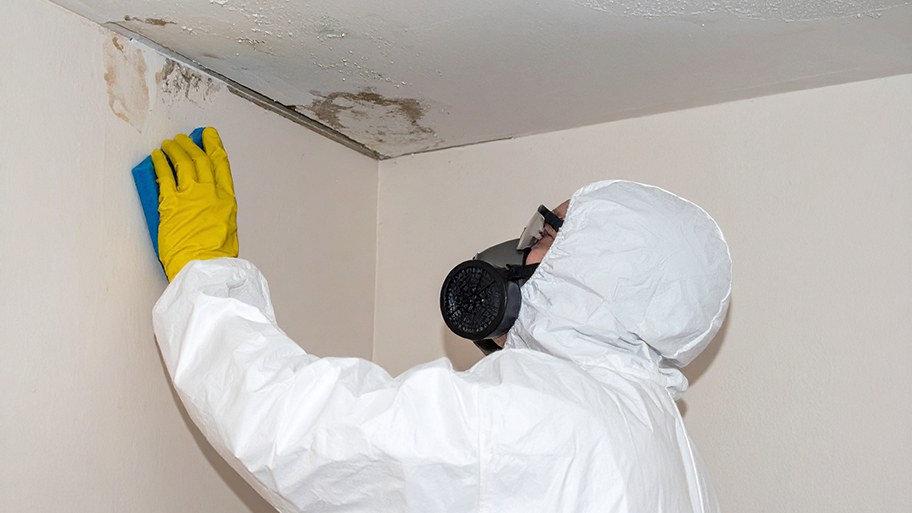
Look for a new or enlarging stain, bubbling or peeling paint, swollen trim, a soft or distorted wall surface, damp carpet at the edge of a room, or a persistent change in indoor humidity. Notice whether the area changes after rain, appliance use, or operation of cooling equipment. A musty smell can be a reason to investigate, but odor alone cannot identify mold, prove its presence, or locate water.
These clues do not establish the cause. A stain can have more than one explanation, and the visible boundary may be smaller than the affected area. Avoid painting over a suspicious mark or opening a wall to investigate on your own. Wet materials can conceal wiring, plumbing, or contamination, and disturbing them may complicate a safe assessment. If water is actively entering, prioritize stopping the source through an appropriate qualified professional.
How a moisture meter helps
A restoration professional may use a pin type meter, which measures electrical resistance between probes, or a pinless meter, which estimates moisture response near the surface. The choice depends on the material and the question being asked. Readings are useful when compared across similar locations and materials. A technician might compare a suspect area with a nearby area that appears unaffected, then check a pattern across the wall rather than relying on one number.
Material differences matter. Drywall, wood, masonry, tile, and composite materials have different properties, and a meter setting or scale suitable for one may not translate to another. Metal, salts, dense surfaces, coatings, fasteners, and changes in material thickness can affect some readings. A reading is not automatically a percentage of water in every material, and a single high result does not identify a leak or confirm mold. Instruments require correct use and interpretation.
A comparative survey can help identify where readings rise or fall and where further inspection may be appropriate. It is not a map of every hidden condition. A wall may contain layers, insulation, framing, or a cavity that a surface instrument cannot fully assess. The technician should explain what was measured, where comparison points were taken, and what limits apply. When access or additional testing is needed, the next step should be discussed before materials are disturbed.
What thermal imaging can and cannot show
An infrared camera displays surface temperature differences. It does not measure water, see through a wall, or diagnose mold. Evaporation, airflow, insulation gaps, framing, sunlight, and heating or cooling systems can all create temperature patterns that resemble or obscure a concern. A cool area may justify a closer look, but it is not proof of wet drywall.
Responsible inspection treats thermal imaging as a screening aid. The operator considers room conditions and the building assembly, then confirms relevant patterns with a moisture meter or another appropriate method. If a thermal image is not supported by comparative readings or other evidence, it should not be presented as definitive water damage. Likewise, an ordinary image does not rule out concealed moisture.
From detection to a drying plan
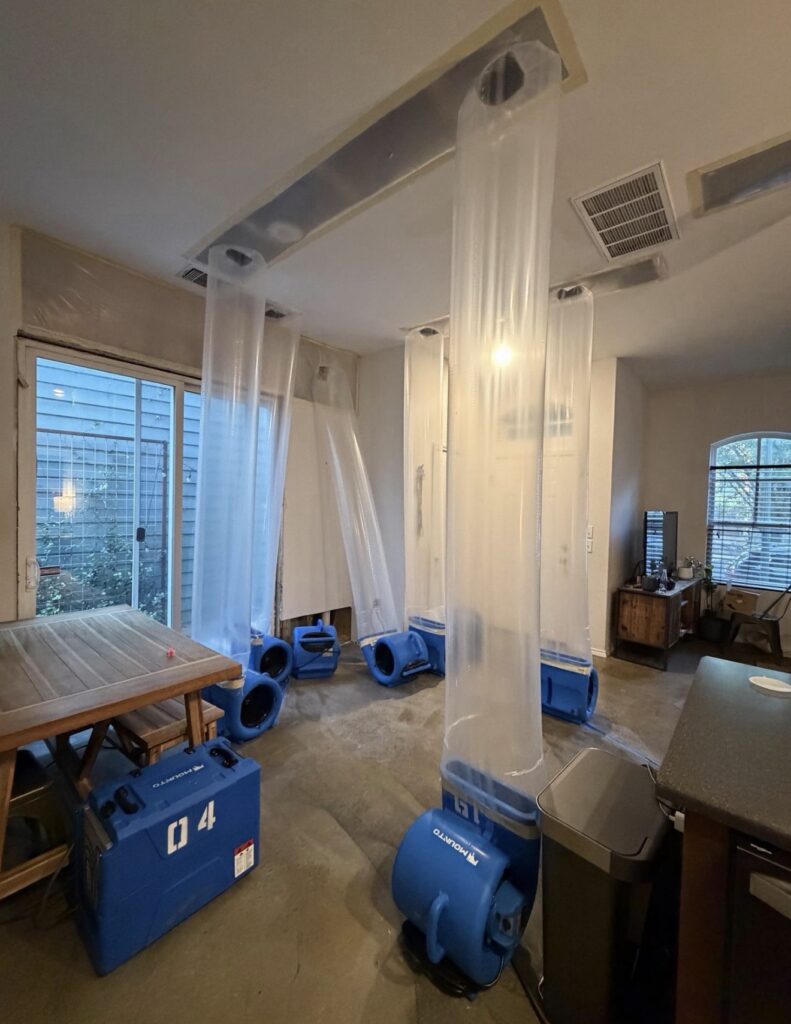
A useful assessment connects observations to a clear record. That record may include the suspected source, affected rooms, surface readings, comparison locations, photographs, and areas that could not be assessed. If restoration drying is needed, measurements can be repeated to track change. Drying equipment and removal decisions should reflect the materials, extent, and conditions, not a guess based on one reading or a fixed schedule. Keep copies of inspection notes and ask which findings require follow up before repairs begin.
A dry standard is a documented target for the affected materials, based on appropriate comparisons and professional judgment. Monitoring helps show whether readings are moving toward that target and whether the plan needs adjustment. It is not a promise that every concealed surface is dry, that no damage remains, or that future water entry will not occur. Ask what the recorded readings mean, what areas remain uncertain, and who is responsible for correcting the source.
Not every leak has the same contamination concern. Water from a clean supply line is different from water that may contain sewage, outdoor contaminants, or other pollutants. The origin, pathway, and time in the building help inform response. Do not assume water is clean because it looks clear. A qualified restoration professional can assess the situation and explain when specialized handling or further evaluation is appropriate.
When to call and what to ask
If you notice water damage in walls, begin by considering the source and the affected materials. Contact a qualified restoration provider when moisture may be concealed, multiple areas are involved, or drying and documentation are needed. For a commercial property, coordinate access and operations with the building manager and relevant trades. A restoration company handles assessment and drying; a plumber, roofer, or HVAC technician addresses the failed system.
Ask how readings will be compared, whether thermal images will be confirmed, what the dry standard will be, and how monitoring will be documented. Ask what is known versus suspected, whether contents or adjacent rooms need review, and what work is proposed before any opening or removal. A careful provider should describe limitations and avoid claiming that a camera alone proves water damage or mold.
Mold and moisture questions
Moisture control is central to limiting mold growth, but an odor, meter reading, stain, or thermal pattern is not a mold diagnosis. Mold assessment is a separate service when warranted, and sampling is not automatically necessary in every water event. The United States Environmental Protection Agency offers practical guidance on moisture and mold in homes. Review its guide to mold, moisture, and your home for general prevention and cleanup information. Follow qualified advice for conditions beyond ordinary household cleanup.
A steady next step in Austin
Innovation Blue Restoration can discuss a suspected leak, moisture survey, or drying concern and explain what assessment may fit your property. For residential water and flood damage restoration , commercial water damage restoration , or guidance after a burst pipe in Austin , call (737) 910 2703 . Online requests are unavailable, so please arrange service by phone. Describe when the issue began, what you observed, and whether the source is still active. The goal is a grounded assessment, clear communication, and a response based on evidence rather than appearances.